


Related Pages
Greenberg Families Library Hours
- Monday: 9AM-5pm
- Tuesday: 9AM-5pm
- Wednesday: 9AM-5pm
- Thursday: 9AM-5pm
- Friday – Saturday: CLOSED
- Sunday: 10AM-3pm
You must have an active SJCC or Greenberg Families Library membership to access the Library.
To purchase a Greenberg Families Library Membership visit the SJCC Front Desk.
Use of the library is included in your Soloway JCC membership!
- The latest Jewish Fiction and Non-Fiction available without long wait lists
- Extensive collection of books for children and young adults
- Foreign and English language DVDs including TV series, movies and documentaries
- MusicCDs from klez to classical to contemporary
- Israeli books and movies
- Computers available for use
To access our extensive collection click here to search the catalogue.
- Click on the Greenberg Families Library link and then hit the catalog button to begin searching.
Carlie MacPherson
Senior Librarian
(613) 798-9818 ext: 245
library@jccottawa.com
Greenberg Families Library Policies and Procedures
Effective July 2022, the Greenberg Families Library no longer accepts book donations.
Borrowing Books
You must have an active SJCC or Greenberg Families Library membership in order to borrow items.
Material requests will be held for a maximum of one week. Holds on new releases, or those with a waiting list of more than 3 people will be held for a maximum of 4 business days.
Find everything on our shelves from home using Greenberg Families Library Online Catalog
Book Return
The library’s book return box is outside the doors of the library.
All policies, procedures and operating hours are subject to change. Patrons will be notified of any updates.
Upcoming Events and Programs
Upcoming Programs
2026 Jewish Book Festival
October 14–20, 2026
Join us and discover a week of engaging conversations, inspiring authors, and stories that celebrate the richness and diversity of Jewish life, history, and culture. Whether you’re an avid reader or simply curious to learn something new, there’s something for everyone. Make the most of the festival with your choice of individual tickets, discounted ticket book bundles, or a Festival Pass for the complete experience.
New Titles
Local Author Spotlight
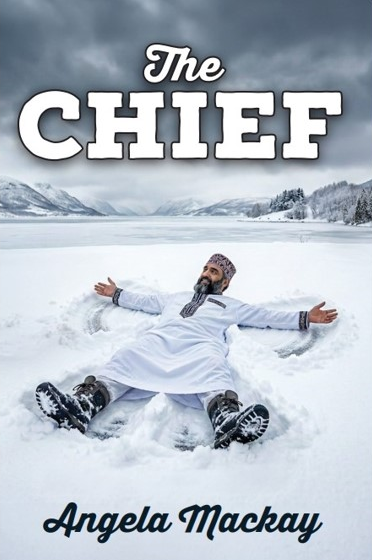
The Chief by Angela Mackay
The Chief is a troubled man, suffering physically from the wounds of war and emotionally from regret and uncertainty, past and future. He has been invited to spend a peaceful recovery at an old friend’s cottage on Lac Faucon, Canada. He is accompanied by Abu, his friend and protector. Dealing with an inquisitive dog, a nosey neighbour, the curiosity of the Quebec police, a dangerously rebellious teenager and, above all, winter are tests of their ingenuity and understanding. Embraced with friendship, reveling in peace and quiet, the Chief delights in the beauty of the changing seasons and the daily wonders and miracles of the natural world. He accepts that his life must change and recognizes the contribution he can make to ending the cycles of violence and hatred that have bedeviled his world, his neighbours and his friends. He embarks on a new path.
Fiction

The Barman of the Ritz by Philippe Collin
Paris, 1940. The Nazis have descended on Paris and the Occupation has begun. Businesses across the city have shuttered, but the legendary Ritz Hotel remains open, its dazzling lights still burning bright on the Place Vendôme. When it becomes the favorite watering hole of the occupying forces, its barman, Frank Meier, is forced to adapt to a new clientele. But Frank has a secret: he is Jewish. Tensions rise as the war progresses, but Frank refuses to leave his post behind the bar. Unbeknownst to the Nazi officers he serves night after night, Frank forms precarious alliances with unlikely accomplices in order to save other Jewish families in the city and keep his loved ones alive. Inspired by real events, with the highest of stakes and a brilliant protagonist, The Barman of the Ritz is a heady cocktail of history and fiction set in one of Paris’s most glamorous places, diving deep into the impossible choices of an ordinary man in extraordinary circumstances.
Other new titles:
- The Gates of Midnight by Helene Wecker (Golem and the Jinni, Book 3)
- Library of Forbidden Books by Mario Escobar
- Love Me Like a Rock Song by Shelly Jay Shore
- Word Salad by Susan Coll
Non-Fiction

Never Again: How the West Betrayed the Jews and Itself by Jake Wallis Simons
When seen through Jewish eyes, the global future looks darker than it has for generations. Fuelled by venomous Israelophobia, violence against Jews, from Amsterdam to New York and from London to Melbourne, is back. Jews across the West are forced to hide their identities, while in the supposed safe haven of Israel they live under constant threat of rocket fire, shootings and stabbings. To make matters worse, in the United States and across Europe, digitally fuelled nationalist chauvinism is on the march. It is no exaggeration to say that we are seeing the end of the golden age of post-war safety for Jews. This speaks volumes about the health of the West. Although Jews are among the first in the firing line, liberal democracy itself is under threat from radicals on both sides of the political spectrum. Unforgivably, we have spent decades undermining our own values of patriotism and tradition, loyalty to peoplehood and homeland, a belief in borders and our peculiar religious and cultural sensibilities. These instincts, which had anchored human society since the dawn of history, were repressed in the name of Never Again, but they slowly gave birth to the opposite. Never Again: How the West Betrayed the Jews and Itself is an urgent new polemic from the author of the acclaimed Israelophobia, which discloses the social and historical causes of the maze of hostility in which Jews are now trapped. Charting the development of this dangerous cultural and geopolitical moment through a collapse in Western leadership since the Second World War, award-winning columnist, broadcaster and foreign correspondent Jake Wallis Simons offers a searing analysis of the state of the West, arguing that we must remember our older values and stand up for them before it is too late.
Other new titles:
- Antisemitisms: A History of Jew Hating by Sander L. Gilman
- The Final Solution to the Jewish Question: A Love Story for the Living by Dara Horn
- Israel on Trial: Examining the History, Evidence, and the Law by Roy K. Altman
- Reviving the Artist Who Fought Hitler: My Life with Arthur Szyk by Irvin Ungar
Young Adult
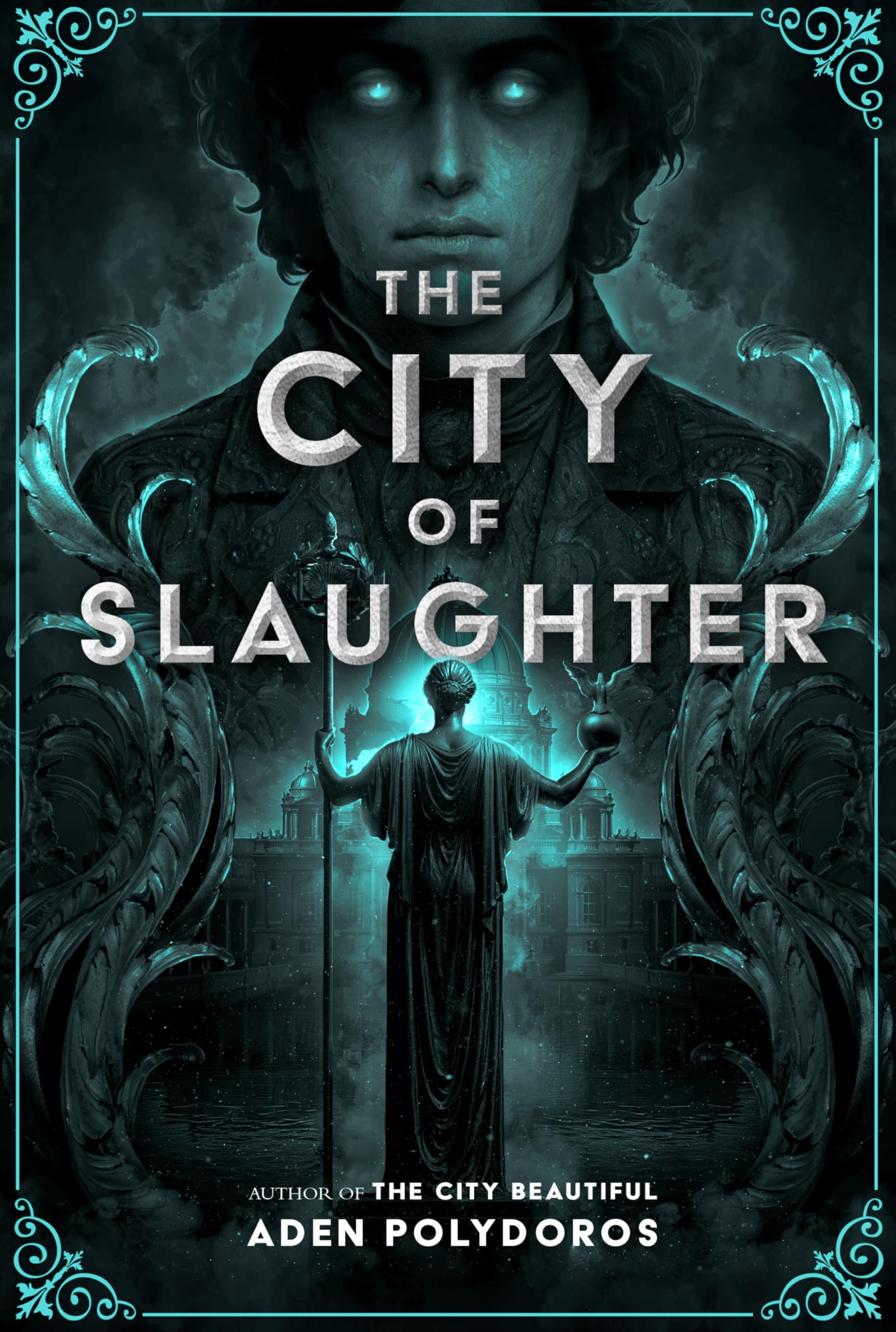
The City of Slaughter by Aden Polydoros
The World’s Fair has packed up, and the tents and food stalls have disappeared. The dybbuk, a restless spirit that possessed Alter, is gone. Life returns to normal for Frankie and Alter as both boys inspire each other to start a detective agency, using skills from Frankie’s dark past and Alter’s desire to do good in their community. But when children start to go missing, Frankie is certain the supernatural is once again to blame as they race to track down a sheyd, a demon-like entity. In order to save his future with Alter, Frankie will have to confront his past.
Juvenile
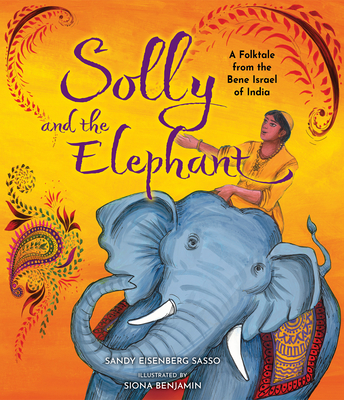
Solly and the Elephant: A Folktale from the Bene Israel of India by Sandy Sasso
A young man’s kindness to a royal elephant saves his life after he is accused of stealing from the powerful Maharaja. Solly’s family makes the best sesame oil in Bombay, India. When he is invited to visit the royal palace one day, he is fascinated by the baby elephant in a parade. He befriends the elephant and sings him his favorite song, the Shema prayer. When Solly grows up, he comes to work as a guard at the palace until one day he is accused of theft. Despite his innocence, Solly is found guilty and sentenced to be trampled by the wild elephants. But the elephant seems familiar to Solly, and after singing the Shema prayer, he reconnects with an old animal friend. From the award-winning team of Rabbi Sandy Sasso and Bene Israel artist Siona Benjamin, this eighteenth-century folktale from the Bene Israel community of Jews in India shows how kindness can be repaid where you least expect it.
- I Wish That You Knew (A Bereavement Picture Book) by Rebecca Gardyn Levington
- Oodles of Noodles: A Counting Book by Jessie Atkin
Libby – Digital and Audiobooks
The Libby app is the easiest way to get started with digital and audiobooks from your public library!
Download the free Libby app on any device to get started or visit libbyapp.com
Why Libby is your perfect reading companion:
- Eliminate wait lists for your favourite titles.
- Read or listen on your phone, tablet, or other e-reader.
- Make any text large print and adjust lighting settings for ebooks.
- Change the playback speed or set a sleep timer for audiobooks.
- Questions? Speak to your librarian, or get help in the app from the U.S.-based Libby support team.

- Install Libby for Android, iOS, or Fire tablets from overdrive.com/apps/libby. Or, visit libbyapp.com in your Chrome, Firefox, Safari, or Edge browser.
- Email the Greenberg Families Library to set up your login credentials (library@jccottawa.com)
- In Libby, follow the prompts to find your library and sign in with your email.
- Browse your library’s collection and borrow a title.
- Borrowed titles appear on your Shelf and download to the app automatically when you’re on Wi-Fi, so you can read them when you’re offline.
- Tap Open In Libby, Open Audiobook to start reading or listening in the app.
- Tap Manage Loan to see options like Renew Loan and Return Early.
Happy reading!
Sefer Torah 1336

This is Sefer Torah 1336, the Ivanovice Scroll
Having arrived in Ottawa on permanent loan from the Memorial Scrolls Trust in Westminster, England, Sefer Torah 1336 was dedicated in 1998 and installed in the Soloway Jewish Community Centre’s Greenberg Families Library in April 2001. Where it has been ever since.
Sefer Torah 1336 comes from the town of Ivanovice, now part of the Czech Republic. Ivanovice is located approximately 7km from the district town of Vyskov. Until 1918, Ivanovice and the region were part of the Austrian Empire. Between the two World Wars, and during the postwar communist era, it was part of the Republic of Czechoslovakia.
History of the Jews in Ivanovice
It is unclear precisely when Jews first settled in Ivanovice, however, tombstones dating from the 17th century indicate that by that point there were a significant number of Jews living there. By 1727, a synagogue had been built. By the mid-20th century the majority of the Jews in the community spoke German.
In 1848, Jews throughout the Austrian Empire were emancipated and received full civil rights. Restrictions on movement were also removed, which led to a migration of Jews to larger towns and cities in search of more economic and educational opportunities. This resulted in a population decline of the Jewish community of Ivanovice. In 1857, the Ivanovice Jewish community’s population peaked at 483, which was approximately 20% of the town’s total population. However, by 1922, this population had decreased to only 80 members. By 1930, the Jewish population had dropped to just 64.


The Jews of Ivanovice and The Holocaust
When the 1938 Munich Agreement was enacted the Republic of Czechoslovakia was dissolved and in March 1939, the region of Bohemia and Moravia became a protectorate of Nazi Germany. This ushered in a period of discrimination and violence against the Jews of the area.
While we do not know for sure, it is most likely that the Jews of Ivanovice were deported to the Terezin (Theresienstadt) Ghetto along with the Jews of Brno around the end of 1941. From there, they would have been sent to a number of concentration and death camps. Jewish life was not renewed in Ivanovice after the war.


The Looted Torahs
During the Second World War the Nazis looted many items, including Torah from damaged Synagogues and stored them near Prague. After the war some 1,100 were recovered. Those that could be repaired were, but those that were not sparked a debate about what to do with them. It was determined that these Torahs would be used for educational purposes, displayed in Jewish Centers, museums, archives, schools, etc. around the world as a memorial and reminder of the Holocaust.
While we are unsure of the original provenance of Sefer Torah 1336, we believe it could have come from this Synagogue. This synagogue was active from the early 19th century until the outbreak of the Second World War. The Synagogue was reconstructed in 1951 but has since been converted into a Czechoslovak Hussite Church.
As written by Rabbi Kassel Abelson:
“A notice was sent to synagogues, museums, colleges and similar institutions throughout the world offering such a scroll on condition that they be kept on perpetual display as a reminder of the Holocaust. Over four hundred synagogues, museums, colleges, etc., have received such Torahs and keep them on display as a reminder of the Holocaust.”
For information on other Memorial Torah Scrolls please visit www.memorialscrolltrust.org
